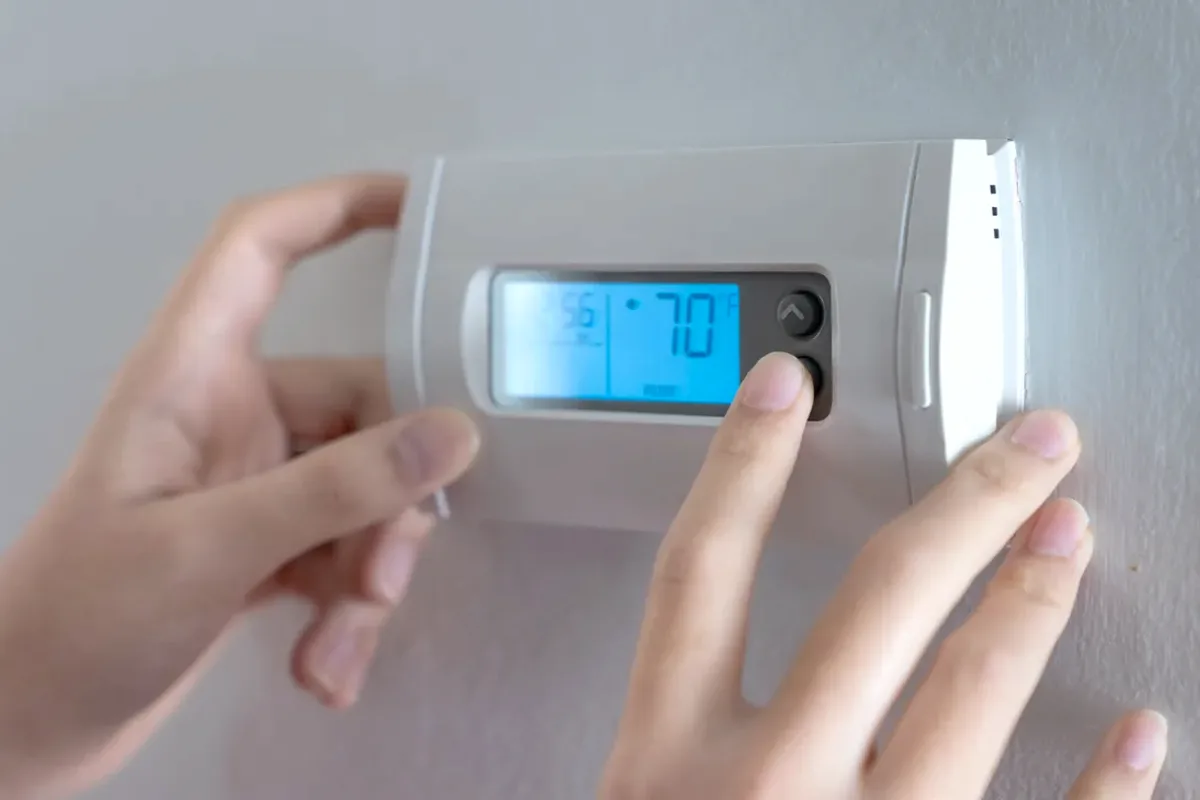
Request thermostat repair & replacement for a property in Windsor. Include the equipment, the problem or planned work, and your location so the request can be reviewed.
Does the thermostat lose power, show an unexpected reading, or fail to control a particular heating or cooling mode?
A thermostat that loses its display, reads inaccurately, or cannot control equipment may have a device fault, wiring issue, compatibility problem, or network concern. Repair and replacement are different options: a connection or configuration issue may not require a new control, while an incompatible or failed thermostat may. The connected furnace, heat pump, or other system and its staging details help define the correct assessment and whether a proposed replacement can control the equipment.
Assessment considers thermostat power, wiring, settings, network connection where applicable, and the connected equipment's control requirements. A single-stage furnace, multi-stage system, and heat pump can require different compatibility checks. This matters because a new thermostat that does not support the system's staging or functions may not resolve the problem. Findings distinguish repair or configuration work from a replacement decision.
Thermostat power, wiring, readings, and network faults
Compatibility with staged furnaces and heat pumps
Repair, configuration, and programmable or smart replacement
Assessment and Scope
Questions for the Proposed Work
01
Trace control symptoms to their source
A blank display, incorrect temperature reading, short cycling, or lost remote access does not identify a failed thermostat on its own. Assessment can consider power and wiring, configuration, and network connection for a smart control. If remote functions fail while local control remains available, that distinction can help separate a network issue from a control or equipment problem. Describe what still works and which functions have stopped.
02
Check compatibility before selecting a replacement
Thermostat compatibility depends on the connected equipment and the functions it must control. Multi-stage furnaces and heat pumps may require support for their specific operating stages, while other systems have different wiring and control needs. Smart features do not establish compatibility by themselves. Confirming the existing system model, wiring, and required functions helps determine which replacement options are appropriate and whether additional configuration is part of the work.
03
Decide whether repair or replacement fits
If the thermostat itself is functioning but settings, wiring, or network configuration are at fault, diagnosis may point to repair or correction rather than replacement. A failed or incompatible control can make a new thermostat the more relevant option. For a smart replacement, consider the required app functions and connection conditions as well as equipment compatibility. The confirmed cause and intended control features should guide the decision, not the device's appearance alone.
Compare the next step
Review the existing schedule and sensed temperatures before linking a bill change to thermostat hardware. Ask which supported settings or control features would change equipment operation. Compare the proposed routine with household occupancy and the installed heating strategy; a new app does not establish that the prior equipment was wasting energy.
Thermostat wiring is not universal. Do not connect wires by colour alone or work on energized wiring; a compatible control must be configured for the equipment it serves.