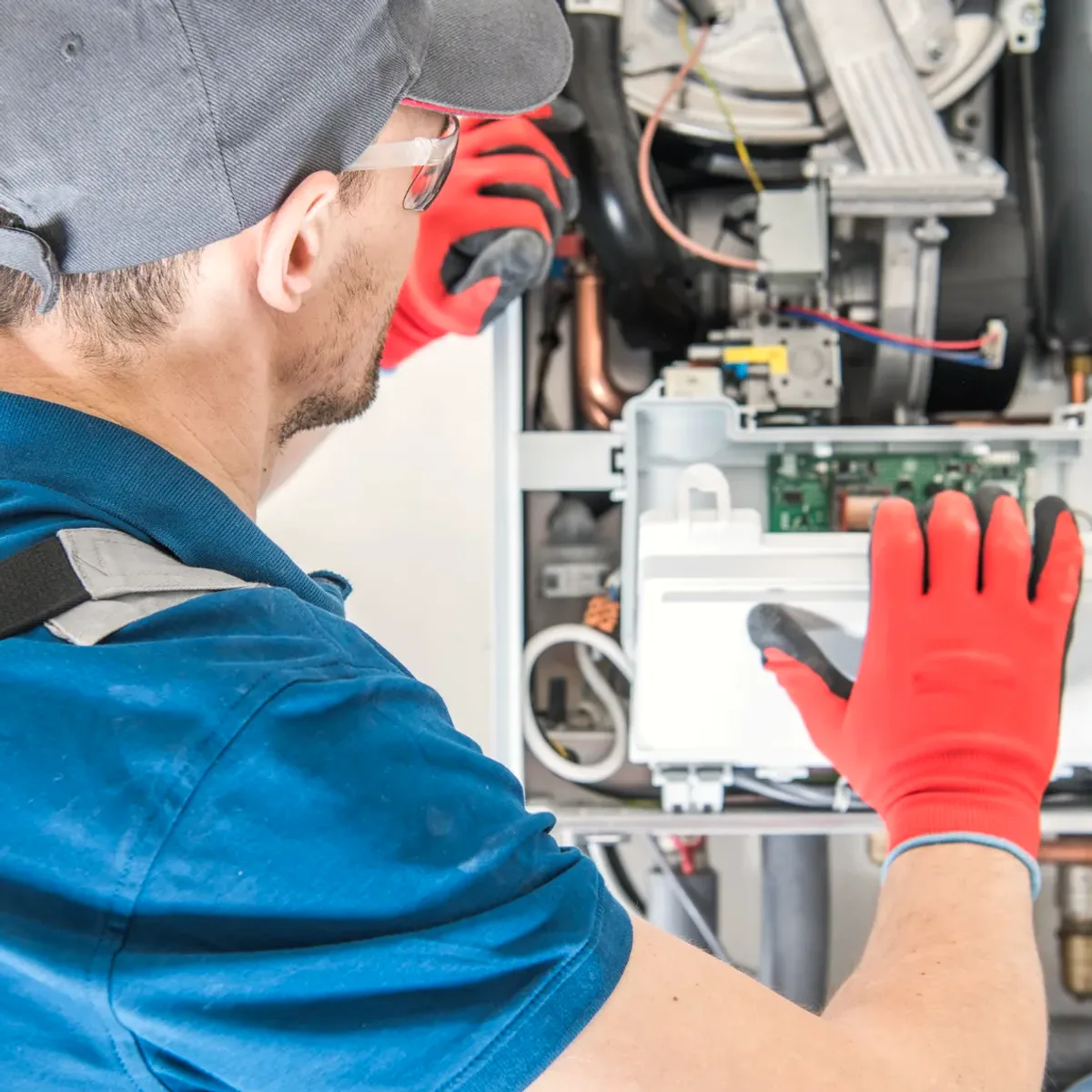
Request boiler service for a property in Windsor. Include the equipment, the problem or planned work, and your location so the request can be reviewed.
Does the boiler fail to fire, lose pressure, leak, or heat radiators or in-floor loops unevenly?
Boiler service depends on fuel, boiler design, and the hydronic distribution it serves. A natural-draft cast-iron boiler feeding radiators presents different installation considerations from a condensing boiler connected to in-floor loops. No-heat, leakage, or falling-pressure symptoms may involve ignition, a circulator, an expansion tank, or another component. Describing the boiler model, fuel, emitters, and symptom history helps define whether the request concerns repair, replacement planning, or maintenance based on inspection findings.
Assessment identifies fuel, boiler type, connected emitters, and operating symptoms. Ignition trouble differs from a circulator fault, while pressure loss requires investigating the source rather than assuming an expansion tank failure. These distinctions determine repair scope. If replacement is being considered, the existing radiators or in-floor loops and their operating requirements matter when evaluating a condensing model and its controls.
Gas, propane, and oil boiler ignition, circulation, and pressure faults
Cast-iron and condensing boilers connected to radiators or in-floor loops
Repair, replacement, and inspection-led hydronic maintenance
Assessment and Scope
Questions for the Proposed Work
01
Distinguish ignition, circulation, and pressure faults
A boiler that will not fire may have an ignition or control fault, while a running boiler with poor heat delivery may involve circulation or distribution. A pressure-relief discharge or recurring pressure loss requires inspection to identify its cause; an expansion tank is only one possibility. Fuel also matters because gas, propane, and oil equipment have different components. Report the symptom and boiler type so diagnosis can focus on the relevant system.
02
Match replacement design to the heat distribution
Replacement planning should account for whether the existing boiler is natural-draft cast iron or a condensing, modulating design, as well as the fuel available at the property. Radiators and in-floor loops have different distribution characteristics and control needs. Those details inform equipment selection and connection planning. A replacement discussion should compare the existing boiler's condition and installation requirements, not assume a condensing model suits every hydronic system.
03
Let inspection findings determine maintenance
Maintenance should follow the boiler manufacturer's instructions and inspection findings, including evidence of corrosion, leakage, operating irregularities, or a component needing attention. A hydronic flush is not automatic; whether it is appropriate depends on the system condition and service requirements. Record the fuel, boiler model, and connected emitters, since these details shape the inspection. A maintenance finding that reveals a fault should be treated as a separate repair decision.
Compare the next step
Bring fuel-use records, occupancy changes, and the heating schedule to the assessment. Ask which findings connect increased consumption to boiler operation, distribution, or controls and which assumptions support an improvement estimate. If a new boiler is proposed, compare its intended operating conditions with the existing emitters instead of treating its published efficiency as a household savings guarantee.
Leave fuel, combustion, electrical, and pressure-system work to a qualified contractor. Do not adjust safety devices or repeatedly add water to a system with an unexplained leak or pressure loss.